2025 Another Annus Horribilis For Wales

Annus Horribilis. Definition: A of disaster or misfortune, the perfect description of the year Welsh rugby has suffered in 2025. Although perhaps just using the word ‘Anus’ would be a more apt.

But just as one ‘anus’ ends another appears to be on the horizon with the prospects for 2026 looking pretty horribilis.

11th March 2023 was a pretty unremarkable date for most people unless of course you happen to be either Chinese or Welsh.

On that date In the far east, China’s government appointed Li Qiang, as the country’s new Premier and in the far west Wales beat Italy 29-17 in Rome.

11 March 2023 was also the last time Wales won a home Guinness Six Nations rugby match.

And if the Christmas editions of Eastenders didn’t do it, then I will take the liberty to depress you. The last time Wales won a Six Nations game in Cardiff was on 12 February 2022 when they beat Scotland 29-7.

So here we are two or three years later depending on your reference point, desperately searching to change the narrative if only briefly.

First up for the men in red are England at Twickenham, not an easy start, but in all truth there are no easy starts for Wales these days.

Three home games against Scotland, France, and Italy, with the latter being probably their best chance of a victory, plus an away fixture with Ireland have the appearance of a daunting schedule for a team and a nation desperately low on confidence, optimism, and physicality.

Hope springs eternal they say, but in Wales hope is heading towards the horizon with its anus on fire, expectation has long disappeared and apathy is waiting just around the corner ready to taser anyone who dares to dream.

2026 will not be an Annus Horribilis it will be a last chance saloon. Let’s hope, no let’s make sure, Welsh rugby does not ride off into the sunset.

Blwyddyn Newydd Dda/Happy New Year to you all.

A Winters Tale-The Guinness Six Nations

The winters are dark and cold in this part of the world, the daylight is in short supply during the days following Christmas, it is a bleak time for everyone, everyone that is apart from rugby fans.

For us, it is the rebirth of the sporting year, and the start of the weekly countdown to the first weekend in February when the 6 Nations tournament begins.

The tournament starts in the depths of winter, and takes us through to the weak sunshine and gentle warmth of early spring, when the tournament concludes in the middle of March.

February 14th, which is, of course, Valentine’s Day, sits perfectly in the middle of the tournament. For the romantically inclined, what could be a better way to show your undying love for your partner than to take them away for a 6 nations weekend.

But I would offer a word of caution. I would suggest you inform “your other half” that rugby is involved before you travel. I have witnessed couples in Paris having a “domestic” as the non rugby partner is informed, over coffee and croissants on Saturday morning, that a large part of the romantic weekend ahead in the city of light will be taken up at Stade de France watching an international match.

But the 6 nations is about far more than just rugby, it’s about making and renewing friendships, it’s about the history, it’s about the fans, the wonderful memories of 6 nations weekends past, and those wonderful ones yet to come.

Memories of matches and weekends shared with family, loved ones, and friends, some of whom are sadly no longer with us, come flooding back, and their spirits are with us this at this time of year, as we prepare to enjoy a winter sporting festival like no other.

The 6 nations weekend has a heartbeat, a soul, it is a living entity, that has been enjoyed and handed down from generation to generation.

Uncles, fathers, grandparents cousins, have all taken pride in guiding their offspring on their first 6 nations weekend, and those youngsters who have taken over the baton, keep the traditions alive, and when the time comes, they will take their young on a similar rite of passage, and that is why the 5 Nations, as it was, and the 6 nations as it is now, is so unique.

Only in this tournament would you find a middle-aged Englishman wearing a Roman centurion outfit sitting outside a café and calmly enjoying a beer in the Piazza Navona.

Each wonderful host city has its own unique atmosphere, sight, sounds and smells.

Whether it’s welsh fans dressed in dragons costumes under the Eiffel Tower, English fans masquerading as medieval knights handing out roses to the scary French riot police, or Italians meeting their ancestors at one of the plethora of Italian restaurants in Cardiff, the joy and friendliness of the tournament are plain to see, which ever match you happen to attend.

Add to that the kilted Scots sitting around the fountains at Trafalgar Square, with their whisky filled hip flasks to keep out the cold, the Irish a sea of green in leprechaun hats clutching a pint of the black stuff, or the stylish French looking cool in their shades, whatever the weather, and whatever the venue, you begin to get a feel of what a thrill to the senses this tournament really is.

Cardiff is the only city where supporters can watch the game, celebrate, and collapse into bed, all within the distance of a Leigh Halfpenny goal kick.

The Principality stadium is squeezed in between the flats, shops, houses, and pubs right in the heart of the city centre, and more importantly, in a country where rain is a frequent, if not permanent resident, it has a roof.

Cardiff is also the home of Brains Brewery, whose products are rather popular on rugby weekends, one of their products is a beer called “Brains SA” the locals will tell you that  “SA” stands for skull attack, which informs you all of you need to know about the side effects of this particular beverage.

Talking of beer, Dublin is of course the home of the silky smooth black stuff, Guinness, and the most popular excursion for 6 Nations fans visiting the Irish capital, is a tour of the Guinness brewery where you actually get a free sample.

The French fans simply adore Dublin, they fly over in the thousands to watch Ireland face “Les Bleus” they used to bring live cockerels with them and release them on the field of play, obviously this is now outlawed, or it may just be that chickens find Air France air fares a bit too expensive these days.

The Irish will charm you, entertain you, smile and then kick the living daylights out of you on the rugby field, there aren’t many more hospitable capitals on this planet than Dublin, as any 6 nations fan who has been there will happily tell you, once they have recovered from their lack of sleep and mind-numbing hangover.

Rome is the 6 Nations “new kid on the block” as Italy did not join the tournament until the year 2000 and the shock for fans here, especially those from Scotland, is that you are likely to experience sunshine, now a famous Scotland player once told me that Scots are born with blue skin, and it takes them three weeks in the sun to even turn white, so the Tartan Army are easily to spot, not only because they are wearing kilts, but due to the fact that they are all clutching bottles of factor 50 sun cream.

Italy joining the Six Nations created an added pressure for the regular fans and there is a big downside to the Azzuri’s inclusion.

Partners, wives, girlfriends, and boyfriends who previously had no interest in rugby, and could be visibly seen yawning when you even mentioned the word, suddenly took a rather disturbing interest in the game, when they discovered that joining you on a potential weekend to the Eternal City was a distinct possibility.

Rome is a venue like no other, no tradition or historical rugby hang-ups here, it is the brash teenager of 6 Nations rugby, and is determined to enjoy La Dolce Vita whatever the result.

A colleague, when in Rome for an Italy v England match, told me of a time he found himself standing at a set of traffic lights in Rome, when he suddenly became aware of a twelve-inch sword being waved in his face, wielded by a local man uttering threats in a deep loud Italian voice.

A few seconds later, his “assailant” reassured my friend that the sword was made of plastic and gave him a “high-five” and a “Ciao baby” and went on his merry way.


If Rome is the brash teenager then Twickenham, the bastion of Englishness, is the grumpy old grandfather, but even so is a shrine for visiting fans, and a shrine that obviously makes visitors extremely thirsty.

At the England v Ireland match in 2014, 160,000 pints of beer, were sold at the stadium, another victory over the Welsh who only managed a mere 77,184 pints in Cardiff at a match between Wales and France.

As you walk from Twickenham station to the ground, every inch of pavement is filled with providers of fast food frying their wares, as the aroma of burgers, sausages, and onions fills the air with a smokey haze you can almost touch the cholesterol.

For Welsh fans, the favourite trip is Edinburgh, this all started due to the fact that until 1977, the matches at Murrayfield were not “All Ticket” so people paid at the gate, as a result, the Welsh always travelled in heavy number.

It is a like a red tsunami flowing down Princess street as the Scarlet hordes make their way to Murrayfield, framed by the beauty of the castle, and the Scott Monument.

Things went horribly wrong in 1977 when at least 110,000 were squeezed into Murrayfield for Scotland v Wales, and it was a miracle that no one was seriously injured, and since that day, Scotland matches became ticket only affairs.

That weekend trip to see Wales play Scotland in Edinburgh was perceived to be a test of manhood undertaken by many generations of Welsh fans.

The journey to this game was known as “The Killer”, leaving Cardiff at 2100 on Friday night, the train would arrive in Edinburgh at 0700 on Saturday morning, the return journey commenced immediately following the match, with the train leaving Edinburgh at 2100 on Saturday night, and arriving in Cardiff at 0500 on Sunday morning, it was not a journey for the faint-hearted.

Mind you I know of people who have travelled on this weekend marathon and never even got to see the game, due to socialising a bit too fervently, they returned home with very little memory of the whole weekend, but the moment they got back they started saving, weekly, for the next trip in two years time.

But putting romanticism aside for one moment, the stark economic factors of the tournament are worth a mention.

Supporters spending makes the championship worth £375 million per year to the participating countries economies, whilst the cities that host the matches (London, Paris, Rome, Dublin, Cardiff, and Edinburgh) benefit by around £150 million.

The main sectors to benefit are food and drink and accommodation, in a study undertaken by previous tournament sponsors RBS, £59 million is spent in bars and restaurants, and £38 million on hotels and other accommodation, and £19 million spent in shops.

In addition, the tournament creates around 3,100 jobs, and all this very real boost to economies occur during what is a quiet time of year for tourism.

In 2017 two matches in Cardiff, where Wales faced Ireland and England, resulted in £52 million coming into the Welsh economy, of which £30 million was enjoyed by the city of Cardiff itself, so it seems everyone is a winner in the 6 Nations, off the field at least.

As the 2026 tournament approaches, many of us, in the middle of a cold dark winters night will lie awake, and as the wind and rain beat against the window, we will feel a cosy warmth, as we remember with fondness, the matches, the weekends, the laughter, the tears, but most of all we will remember the people we have shared the matches with, and those friends we have met because it is they that make the six nations tournament so very special.

A WRU Christmas Carol With Apologies To Charles Dickens

It was Christmas Eve, and the WRU was dead dead as the crowds that once shook the Arms Park. There was no doubt whatever about that. The door-knocker bore the dragon still, but it was tarnished, as if it had not known polish since the last Grand Slam.

The Ghost of Rugby Past came softly, wrapped in old programmes and coal smoke, its face at once youthful and ancient.

“Rise,” it said, “and walk with me.”

They walked through streets alive with song. Miners in caps stood shoulder to shoulder with teachers, choirs swelled before kick-off, and mud-streaked heroes ran not for contracts but for county, chapel, and pride.

“Do you remember this?” asked the Ghost.

The WRU trembled, for it remembered and could not return.

The Ghost of Rugby Present strode in with a balance sheet under one arm and a festive scarf under the other, though neither brought warmth. It showed the WRU a table set poorly: regions scraping by, players overworked, supporters counting pennies where once they counted tries.

In a cold meeting room sat men speaking warmly of “strategy” while outside, clubs shuttered like shops on Christmas Day.

“See here,” said the Ghost, pointing to a small, pale boy training alone in the rain.

“Is he a player?” asked the WRU.

“He is Grassroots,” replied the Ghost. “And unless you care for him, he will not long survive.”

The final spirit arrived shrouded in silence, black as a Neath rugby shirt.

The WRU saw empty terraces where songs once rose like prayer. It saw red jerseys worn by few, watched by fewer still. It saw headlines of decline, and a dragon remembered only as a crest on old pint glasses.

“Are these the shadows of what must be?” cried the WRU, “Or only what may be?”

The Ghost answered not, but turned its hand toward a neglected field, overgrown and locked.

Awakening with a start, the WRU found it was Christmas morning.

“No more meetings without meaning!” it cried. “No more gold before game! I will honour the past, support the present, and invest in the future!”

It flung open its coffers (modest though they were), spoke plainly, listened carefully, and remembered at last that rugby was made by people, not paperwork.

And so it was said, in years that followed, that Welsh rugby kept Christmas well — and if not always victorious, then always alive.

And Tiny Tim, now a fly-half, said:

“God bless us, every club.”

To All Welsh Rugby Fans From Mike Pearce

You don’t choose Welsh rugby.

It chooses you, quietly, like rain soaking into stone.

You inherit it with the echo of a crowd rising to its feet.

With the muddy laces of your brother’s boots.

With your father’s growl when the anthem starts.

It lives in small places.

In the cracked voice singing calon lan in a village pub.

In the flint-eyed stare before a tackle that might break bone.

In the kitchen radio on a cold Six Nations morning.

Wales is a country where the jersey is heavier than it looks.

Where courage is ordinary, and sacrifice is expected.

Where a line break can lift a nation, and a tackle can silence time.

Where win or lose, we never give up however bad things get.

Because this isn’t just a game.

It’s Wales

Christmas Howard Davies Wise Man And Welsh Rugby Star

Christmas Day 1916 was a fairly lively affair for a certain Mr and Mrs Davies from Llanelli, as Mrs Davies gave birth to a bouncing baby boy amidst all the tinsel and the stuffing.

In a moment of inspiration, or maybe sheer madness, they named their newborn son Christmas Howard Davies, whether this was a blessing or a curse for the incumbent we will never know.

Had the baby been a girl, no doubt she would have been called Holly, Carol or even Ivy, much less traumatising one would imagine than being called Christmas.

In the record books, Christmas Davies is forever referred to as Howard, and it is under the name of Howard that his distinguished rugby career is chronicled.

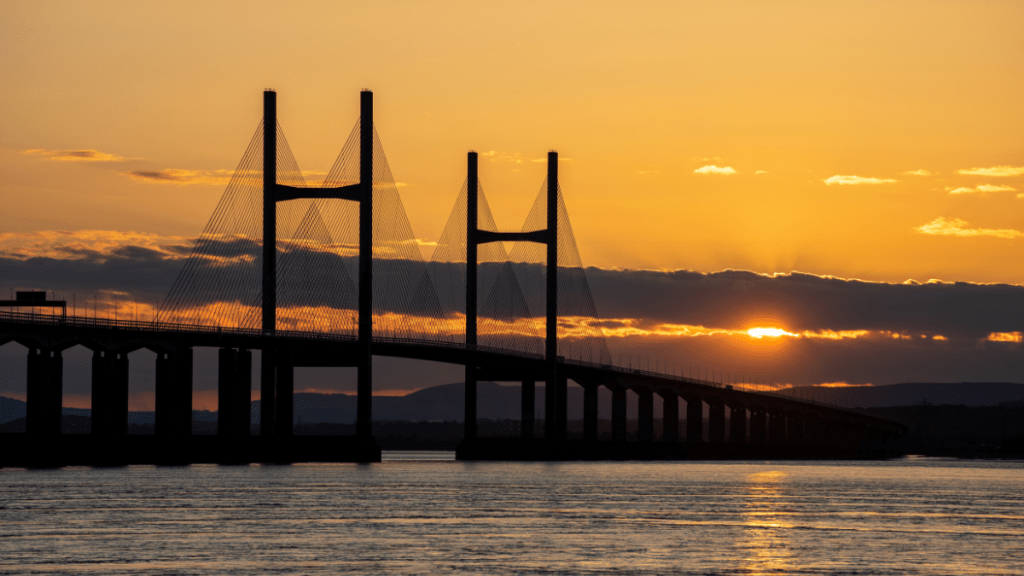
One of the few players to represent Wales either side of the Second World War. He began his rugby playing career with Burry Port All Blacks, before crossing the Loughor bridge to play for Swansea, from where he won his first international cap against Scotland in. 1939.

After a successful debut, Wales won 11-3, he was selected for the following match against Ireland in Belfast, which proved to be Wales, and Ireland’s, final international before war broke out.

Wales first post-war championship international, in the 1939 Five Nations tournament, was against England in Cardiff in 1947, and Christmas Howard Morris, having moved west from Swansea to Llanelli, was at full back. The home side fielded thirteen new caps, only Davies and Haydn Tanner had been capped previously.

Wales lost to England that day, 9-6, but they went on to defeat France, (3-0) Scotland (22-8) and Ireland (6-0) that season, with Christmas, or should I say Howard, featuring in every game, with Wales & England emerging as joint Five Nations champions,

Davies was a superb tackler and had a massive boot on him, his last ever game for Wales was in that 6-0 victory against Ireland in Swansea on 29 March 1947.

He continued his life in Burry Port, earning his living as a steelworker.

Having been born on Christmas Day, it seems appropriate that Christmas Howard Davies left this world on another memorable date in the calendar, 5 November 1987.

Gerald Of Wales Hawkes Bay Vintage 1971 

Hawkes Bay is located on the east coast of New Zealand’s North Island.

The hot summers and cool winters provide excellent weather for growing the grapes that provide the areas famous wines, particularly the highly regarded Cabernet Merlot blends.

It is also one of the most seismically active regions of New Zealand and has had around fifty notable earthquakes since the 1880’s.

However on Saturday July 17th, at McLean park, Napier, the earth moved for an entirely different reason when the British Lions came to town.

The epicentre of this phenomenon was a certain Welshman, Thomas Gerald Reames Davies.

This was the 19th match of the Lions tour they had already played two tests against the all Blacks with one victory and one defeat and were building up for the third test in which Gerald was to figure prominently.

Referees in those days were not neutral and one of the main remits of mid week teams was to beat the living daylights out of the touring team in preparation for their next match against the All Blacks, Hawkes Bay proved no exception in a thoroughly nasty match.

Amidst the darkness of brutality and violence there shone the golden bright light of sheer rugby beauty by the man from Llansaint.

Gerald scored three first half tries whilst on the right wing and one late in the second half whilst playing at centre, when Mike Gibson went off with an injured hamstring.

His first try came from a Hawkes Bay dropped goal attempt that bounced off the posts gathered by JPR, the ball went through six pairs of hands before Gerald Davies touched down.

The second try followed a chip through from Mike Gibson which Davies gathered before touching down to score.

Gareth Edwards long pass from a blind side ruck went to Davies who shimmied and sidestepped half of Napier before touching down with defenders spreadeagled all around him,his third try of the first half.


A fourth try came in the second half helping the Lions to a 25-6 win in a brutal encounter 

Dai Smith’s words from “Fields of Praise” written in 1980 beautifully encapsulate Gerlad Davies, the rugby player, I find it hard to comprehend, that I last saw him play thirty nine years ago, where has the time gone ?

Gerald Davies was poised on the field, his element, until the moment to switch and dart like a fish came. He sidestepped at a speed whose rapidity still never made him lose control, to left or right, squeezing fearlessly through eye of the needle gaps that no defence could cover, for no one else could have gone through them.

When his markers knew his intentions they could not master the execution of his desire, when he was checked in that one to one confrontation which comes to wing three quarters more than other players he was supremely brave, moving in close and quickly before, ingenuously and bewilderingly , pausing, absolutely and fractionally, only to shoot away.
Like the flickering tongue of a fly eating lizard he was nakedly on show, and then retracted to his own satisfaction, all in an instant.

His thighs were strong, despite a frail upper body, so that he could, if held, breakthrough any half grasping hands whilst his own understanding of physical limitations, that would have made head on bone crushing tackles either foolishly inept or worse, counter-productive, never made him an easy man to elude.

The lurking feline presence of Gerald Davies could instil a wary trepidation that let others in through less guarded entrances.

Tonight I will raise a glass of Cabernet Merlot in memory of that magical day back in 1971, a Hawkes bay vintage indeed.

Battered Wales Trying To Think Outside The Boks

The World Champions South Africa against a full strength Wales side had the potential to be an extremely painful experience for the men in Red. However, with the home side missing thirteen players who ply their club rugby trade outside the country defeat, and a very large one, was almost a certainty.

When you also take into account injuries to talisman Jac Morgan and hat trick hero Tom Rogers the word daunting does not even come close to describing the task that loomed ahead.

There was certainly a case for this match to be cancelled on health and safety grounds after the Springboks put 32 points on a supremely talented French side, saw off Italy, and destroyed the Irish scrum in Dublin.

As the match in Cardiff took place outside the official autumn international test window, the English clubs (and Montpellier) had full protective custody of their charges, depriving Wales of the few world-class performers they have at their disposal in these lean times.

A crowd of 50,112 masochistic individuals turned up to watch, I would normally say more in hope than expectation but on this occasion there was very little, if any, hope or expectation, although trepidation was in plentiful supply.

A Wales defeat by 73 points to Nil was what we feared, but the manner of the loss was hard to swallow. Conceding eleven tries and not scoring a single point made it a humiliating experience.

The value of a match like this can be regarded a success solely in financial terms for the governing body. A depleted home side being used as cannon fodder against the best team in the world will have done nothing for squad morale, or indeed any limited optimism for the upcoming Guinness Six Nations.

So putting to one side the annihilation and humiliation of Saturday’s result how do we assess the Autumn programme from Wales point of view ?

In the opening game against Argentina there were some positive signs, but in a 50+ points defeat they tend to come into the clutching at straws category.

The match against Japan was in effect a knock out game with priority seeding for the 2027 Rugby World Cup the reward for the victor.

A match that just a few years ago would have been used as an opportunity for Wales to play their second string outfit was filled with jeopardy, nervousness and foreboding.

As it turned out Wales produced a dreadful performance that earned them a last minute victory such are the vagaries of sport.

Of course one swallow doesn’t make an Autumn and just a week later that swallow turned into a giant gulp when the All Blacks came to town. Smarting from defeat to England they put 50 points on Wales but there were encouraging signs in defeat, particularly in attack where Wales managed to score 4 tries.

And finally to last Saturday when our worst fears were realised. Having earlier making the excuses for Wales and their absentees, in the interest of balance it is worth noting that South Africa were without World Rugby Men’s Player of the year Malcolm Marx, Thomas du Toit, Boan Venter, Lood de Jager (who was still serving a suspension for a dangerous tackle), RG Snyman, Pieter-Steph du Toit, Grant Williams, Handre Pollard, Manie Libbok, Jesse Kriel, Cheslin Kolbe, and Edwill van der Merwe, who had all returned to their provincial unions and clubs.

Next up for Wales are England at Twickenham on February 7th part of the opening weekend of the 2026 Guinness Six Nations. The ‘hymns and arias’ are in cold storage and have been for quite some time, but perhaps the ‘long and winding road’ would now be a more appropriate musical accompaniment as things stand.

Autumn is turning to Winter and there are some bitter days ahead for the game in Wales. As the cold dark nights descend, the game at all levels is on a precipice.

In meteorological and sporting terms it is worth remembering that after the longest night the sun always returns and even the toughest winter ends in spring.

But for now in Wales the total eclipse continues, let us hope 2026 provides a few shafts of light.

Antoine Dupont-The King Is Back

After 266 days out of action Antoine Dupont finally returned to the green green grass of home on Saturday after a long term injury.

Coming off the bench with the number 20 on his back the whole world of rugby let out a collective sigh of relief, boy have we missed him.

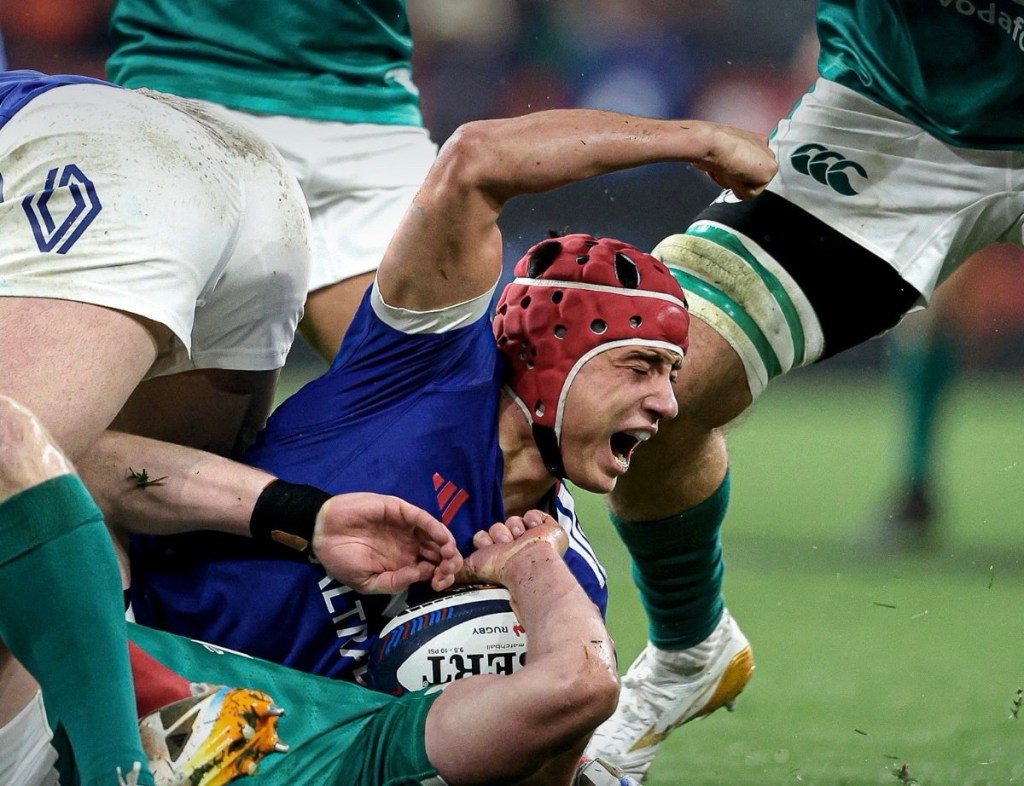
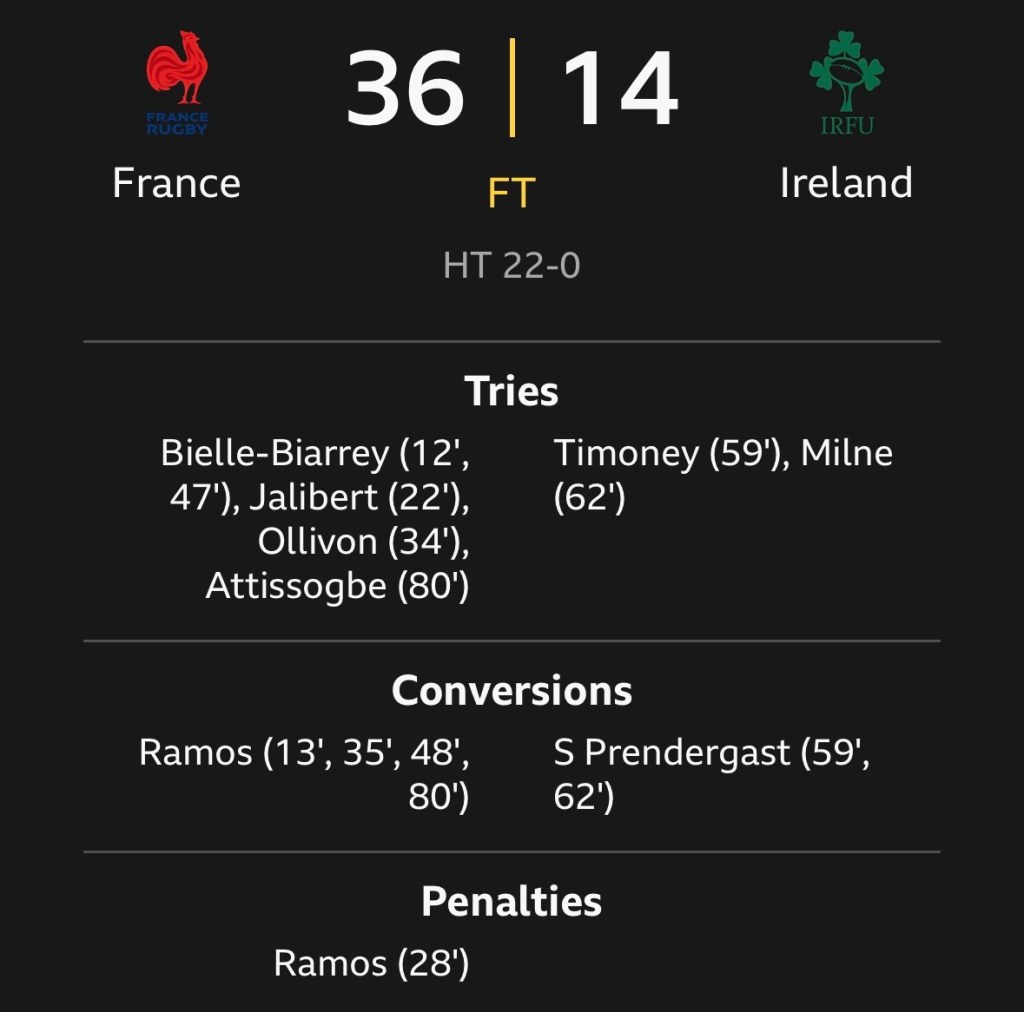
It has been nearly nine months since that injury which occurred on 8 March 2025, during the Guinness Six Nations match between France and Ireland in Dublin.

The specific incident: during a ruck in the first half, an opposing player, Tadhg Beirne, fell onto Dupont’s leg while clearing out at a ruck. The pressure caused Dupont’s knee to buckle.  He left the field around the 29th minute, visibly distressed and limping. He suffered a rupture of the cruciate ligaments in his right knee.

Along with the cruciate-ligament rupture, he reportedly also sustained damage to his medial meniscus and collateral ligament.  

There are players who define a team, and then there are players who redefine a sport. Antoine Dupont has long been counted among the latter, the heartbeat of French rugby, the conductor who turns chaos into choreography.

When news first spread of Dupont’s injury, the reaction throughout the rugby world was not just disappointment it was a collective sigh. Fans, teammates, and rivals alike understood what his absence meant. 

The French national side lost its spark plug, its accelerant, the player capable of flipping a match on its axis with a single darting run or laser-flat pass. And Dupont himself was thrust into a different kind of struggle, one fought not on playing field but in silent training rooms, under the hum of physio machines, with patience as his toughest opponent.

Injury can be a lonely companion. It strips away the roar of the crowd and replaces it with repetition, doubt, and the stubborn march of time. Yet it was there, in the quiet lonely corners of rehab facilities that Dupont displayed the unseen dedication and determination arriving early, staying late, attacking recovery with the same precision and resolve he brings on the field. He refused self-pity, channeling his frustration into discipline, knowing that every tedious session was a stitch in the fabric of his return.

The first touch of the ball in the 50th minute drew a swell of anticipation. His movement sharp and balanced was not simply the mark of a recovered athlete. It was the statement of a man who refused to let adversity dull his instincts, it was like he had never been away.

In sport, there is something profoundly human about watching someone rise again. Dupont’s return is not just a boost for Toulouse and France it’s reminder of why we watch, why we care. It’s the resilience of a player who refuses to be diminished by circumstance. His comeback echoes far beyond France’s tactical options; it speaks to the spirit of a competitor whose love for the game burns brighter than the setbacks thrown in his path.

As he re enters the fray, eyes sharpened and striding purposeful, the rugby world braces for the future familiar shockwave of his brilliance. Because with Antoine Dupont, the extraordinary always feels just a heartbeat away.

For the record Toulouse beat Racing 48-24 in Pita Ahki’s final match for the club, it was a pretty memorable night at Stade Ernest-Wallon.

DFS DVT And My Quilter Autumn Nations Weekend

 is a stressful time for all those involved with international rugby. Whether you are a rugby fan, a rugby writer or perhaps more importantly a rugby player, the stresses and strains that three or four weekends of back to back matches can impose upon your body and indeed your mind can be extremely challenging.

This weekend with no official media duties to perform, my main health concern was DVT after spending almost twelve hours courtesy of DFS on the sofa, interspersed with short sprints to the kitchen to top up on saturated fats.

Talking of mental health, watching Wales v New Zealand comes into the realms of PTSD, but then again doesn’t every match involving Wales fall into that category these days.

With Wales trying to extend their unbeaten run to seven days, the Haka was drowned out by my snoring All Black Labrador Rufus, who was totally unimpressed with two legged humans of a similar colour disturbing his beauty sleep with their grunting and throat slitting gestures.

Wiping away my salty tears after a 52-26 defeat, it was straight into Ireland v South Africa with a Nespresso and hob nob accompaniment, a match that proved to be a full-bodied as my arabica roast.

With more cards than Clinton’s, Irish players were hopping on and off the field like Michael Flattley on steroids. Four yellows and a red were an aid the world champions gratefully gobbled up scoring four tries to one their to earn a 24-13 win, the Boks head home as they arrived number one in the world.

With cramp setting in and in urgent need of hydration, the healthy sort, there was Just time for a virtual evening in Paris with a glass of Red and a statin both purely medicinal to get me through the final vestiges of Saturday night.

Fabien Galthie is under fire in many quarters of the French press for only delivering a Grand Slam and a Six Nations Championship in recent years and for having the temerity to help deliver two defeats to the best team in the world, South Africa. In Wales, they build commemorative gates for a coach with that kind of record.

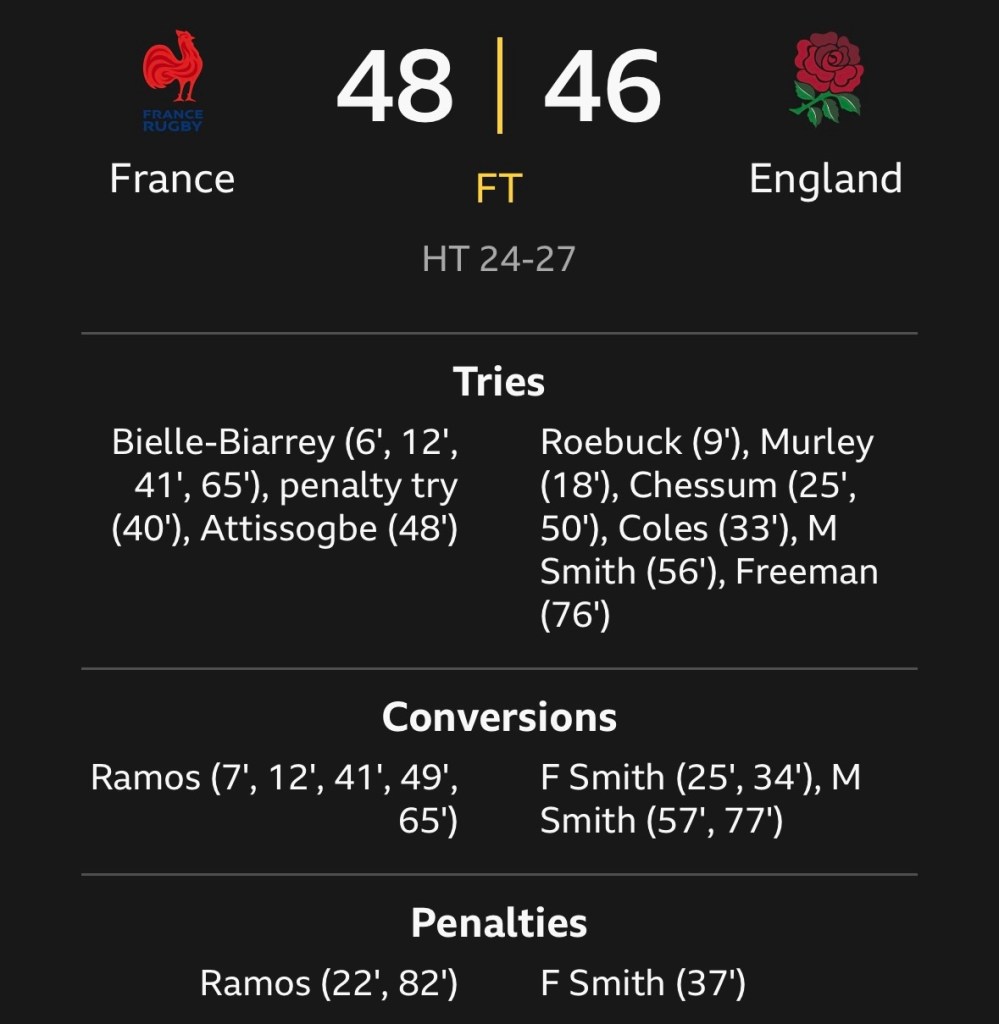
Les Bleus with snowflakes falling at Stade de France eventually pulled away from Australia to earn a 48-33 victory, but it was not without its squeaky bum moments for the home team.

In an entertaining match with twelve tries, the French back line showed some wonderful touches, with Louis Bielle-Biarrey demonstrating his warp factor speed along with some deft footballing ability.

Sunday dawned and following a caffeine fuelled morning recovery session it was back to the sofa. When it comes to delivering, Scotland are a close second to yodel in the success stakes. Their blueprint for “this is our year” shown below was leaked just before they conceded five second half against Argentina a week ago.

They finished their Autumn campaign with a 56-0 win over Tonga to go with their opening weekend victory over the USA. The tartan golden generation once again failing waiting to match words with deeds.

Finally, minus the bagpipes and my barking dog, a perfect storm for which the noise abatement society should provide a suitable warning, it was a trip to Twickenham where the much loved Pumas were facing an England team on the crest of wave that is in danger of becoming a tsunami such is their strength in depth and the amazing winning run they found themselves on.

The comeback kings from the Pampas nearly did it again but in a nail-biting finish just came up short 27-23 after trailing 17-0 they once again launched a second half come back that Lazarus would have proud of but just fell short at the final whistle.

If this weekend was spent on the sofa for many of us Welsh folk, next weekend will be spent behind it as Wales without their twelve English and French based players face the World Champions South Africa in Cardiff.

It is time to say a prayer and light a few candles. Things could, and probably will, get very ugly. No sofa for me next Saturday as I will be in Wales to witness the expected Cardiff carnage.

England v New Zealand Rugby In Black & White

Dim, drizzly, murky November afternoons feel like the perfect backdrop for rugby international matches with an historic rivalry.

Memories come flooding back of great winter treks when New Zealand would tour these islands for months on end travelling the length and breadth of our countries playing clubs, combined xv’s and finally the Barbarians.

In the modern professional era, this type of rugby odyssey is no longer viable, and the game is all the poorer for it. But there are still the vestiges of those magical days in international form, where the anticipation and thrill of the contest are still very much as they have always been.

On days like these you can feel the ghosts of seasons past breathing down your neck Duckham, Kirkpatrick, Going, Obolensky, days when rugby was black and white on the field and on your television.

England and New Zealand matches, for more than a century, have heavily favoured the All Blacks, but the rivalry is about far more than wins and losses. The two sides first met in 1905, during the famous tour of the “Original All Blacks.” New Zealand won 15–0 at Crystal Palace, a match that introduced English crowds to the revolutionary running and passing style that would come to define New Zealand rugby. For England, it was both a shock and a revelation, a glimpse of how far the game had evolved beyond its birthplace.

The two nations have met each other on 43 occasions with New Zealand winning 33, England 8 and two matches have been drawn.

This All Blacks side, by their own high standards, have shown hitherto unseen signs of vulnerability, emphasised by recent narrow defeats to Argentina and massively to South Africa.

But in victories over Ireland and Scotland over the last few weeks we have seen if not a rejuvenation then certainly signs of greater things to come from this group of players. Facing England at Twickenham would be the acid test.

For an England side unbeaten in their last nine games, this was the day to prove that they could live with the big dogs of the game. With a frightening depth of talent now at their disposal, there could be no excuses.

England started in full colour, pounding the All Black defence, but the visitors held out and scored tries through Fainga’anuku and Taylor in a five-minute spell.

Lawrence pulled one back for England before George Ford landed two drop goals in the space of two minutes just before half-time to make it a one point game.

The second half couldn’t have started much worse for New Zealand, a harsh yellow card for Codie Taylor and a try conceded within the opening three minutes.

England pounced on an error strewn All Blacks team and built up a 25-12 lead before Will Jordan scored for New Zealand closing the gap to sevens points with fifteen minutes remaining.

England despite being down to fourteen following Ben Earle’s yellow card not only saw out the remainder of the game but managed a further try from right wing Tom Roebuck.

Make no mistake, this was a convincing win for England. Whilst their chest pumping and posturing after every successful turnover and penalty may not be to everyone’s liking, there is no doubt they have woken up the Allianz Stadium, which was as loud as I have ever heard it.

It may have been rugby in black in white, but there will have been plenty painting the town red in the Twickenham area and further afield last night and maybe for a few nights to come.